2 min read
The Cover Curio
A bird, a gun, and twelve instants
Motion is the most apparent of the characteristics of life; it manifests itself in all the functions […]
— Étienne-Jules Marey, Animal Mechanism (1874), Smithsonian Libraries and Archives
In 1882, the French physiologist Étienne-Jules Marey aimed a gun at a flying bird and brought home twelve instants.
His fusil photographique really was shouldered and sighted like a rifle: a handsome contraption of wood, steel, brass, leather, glass and ivory. Pulling its trigger started clockwork inside. A shutter spun; a light-sensitive circular plate advanced in steps; twelve tiny exposures were made in one second. Marey could follow a bird through the air while the mechanism chopped its wingbeat into pieces. He initially called the method photochronography; he adopted the term chronophotography in 1886. The surviving instrument belongs to Paris’s Musée des Arts et Métiers.
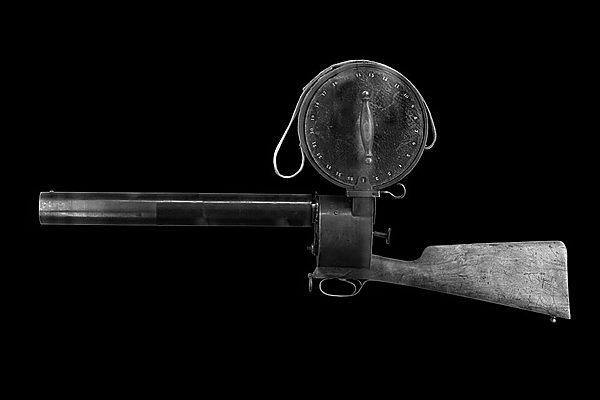
Marey’s 1882 chronophotographic gun
The gun’s peculiar virtue was also its deceit. It never recorded flight itself. It recorded twelve motionless birds separated by eleven absences, each absence neatly equal and entirely invisible. Marey could mount the sequence in an optical toy and make the bird fly again, or inspect the frames separately and study positions too quick for the eye. Twelve photographs became either evidence or animation according to what the observer did next.
The machine knew nothing of wings. It merely kept perfect time while light struck glass. The flight happened once in the sky—and then, by a different mechanism, inside a human head.
6 min read
The Linotype
When words had weight
The hot-metal New York Times ended with astonishingly ordinary words. On July 2, 1978, the paper produced its final hot-metal edition, using Linotype-cast body text alongside handset and Ludlow-cast headlines. The New York Public Library preserves the last matrix used, bearing the phrase Special to The New York Times. Then the composing room crossed a technological border: on the other side, words no longer had weight. New York Public Library Internet Archive
For ninety-two years, the machine between an editor’s copy and the press was a Linotype: part keyboard, part foundry, part mechanical sorting hat. Ottmar Mergenthaler’s first production machine went into the New York Tribune composing room in July 1886. It did not fetch pieces of type from a case. It made new type, one whole line at a time—hence “line-o’-type”—then melted yesterday’s lines to make tomorrow’s. Science Museum Group Melbourne Museum of Printing
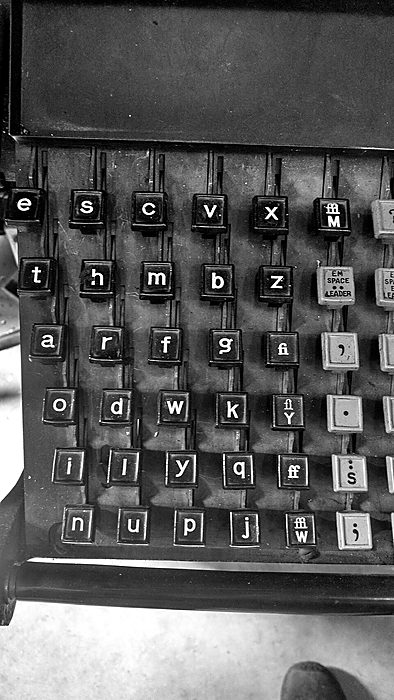
The ninety-key Linotype keyboard, with ETAOIN SHRDLU in the first two columns
The operator faced ninety keys, six rows of fifteen: black lowercase keys on the left, blue figures and punctuation in the middle, white capitals on the right. There was no QWERTY and no shift key. The common lowercase letters occupied easy vertical runs, beginning e-t-a-o-i-n and s-h-r-d-l-u. If an operator spoiled a line, the quick way to mark it for removal was to run a finger down those columns and cast the nonsense. Occasionally the bad line escaped removal, and ETAOIN SHRDLU appeared in print like the name of a minor Mesopotamian god. Mergenthaler Linotype Company, 1940 Library of Congress
A keystroke released a brass matrix—a slim mold usually bearing two recessed character forms—from a channel overhead. The matrices slid into a row. Between words fell spacebands, each made of two sliding wedges. When the row was nearly full, the operator sent it to the casting mechanism. A ram pushed upward on every spaceband; the wedges widened together until the line exactly filled its column. Against this tight row of molds, the machine cast pot metal at about 550°F, trimmed the result, and delivered a solid slug with a raised, mirror-image line ready to ink. Justification had become something a set of wedges could do without knowing what a word was. ASME Science Museum Group Mergenthaler Linotype Company, “The Big Scheme of Simple Operation”
Casting was only half the trick. A newspaper needed each matrix returned to the correct magazine channel before it could be used again. Inside the V-shaped notch at the top of every matrix were two banks of seven tiny teeth. The pattern corresponded to a place on the distributor bar. Carried along the bar after casting, each matrix remained supported until its particular tooth pattern met the matching gaps; there, and nowhere else, it dropped home. The alphabet sorted itself by a physical code cut into brass. Damage those teeth and the machine could no longer be trusted to send a letter home. Mergenthaler Linotype Company, 1942
This was not knowledge one picked up by admiring the machine. A 1918 New York school advertised evening instruction for $5, seven weekday weeks for $80, or a three-month course for $150—all on real Linotypes, no dummy keyboards. Schools also operated around the country, including one in a Portland public high school. Operators had to read copy, judge line length, handle matrices, and keep the machinery running beside a pot of molten alloy. The machine automated typesetting by creating a new specialist. Smithsonian Lemelson Center
Then photography and computers removed the metal. On that July night in 1978, the Times retired its last 61 Linotypes; proofreader David Loeb Weiss and operator Carl Schlesinger preserved the changeover in the film Farewell, Etaoin Shrdlu. Working machines survive in museums, but the mass community that could keep rows of them fed, tuned, and understood did not. Library of Congress New York Public Library
The Linotype stored knowledge twice: letters in molds, and destinations in teeth. It could put every symbol home perfectly. It could not tell whether the sentence was true.
10 min read
The Long Read
The Man Who Shrugged
The Man Who Shrugged
At 03:17, the dead man lifted his left shoulder from the table.
Nara Toma’s hand found the emergency clamp before the shoulder fell. The movement had been small—six centimeters, perhaps—but it had drawn the sheet tight across Emil Vale’s chest and turned his head toward the window.
“Hold contrast,” she said.
The imaging pump stopped. Morrow continued its patient pulse: sixty-eight beats per minute, each one manufactured in the basement by a centrifugal impeller. Emil’s own heart quivered occasionally but contributed nothing.
He had been dead for ninety-four minutes.
Not mostly dead, not clinically unresponsive. Two physicians had pronounced him at 01:43, after forty-seven minutes of resuscitation. The ambulance record showed a pulse recovered twice and lost twice. His brain had gone without useful circulation for intervals no one could reconstruct exactly.
Then the provisional-perfusion team had arrived.
They’d threaded cannulas into his femoral artery and vein and displaced much of his blood with a cold red fluid carrying synthetic haemoglobin, electrolytes, anticoagulants, nutrients, anti-inflammatory drugs, and compounds intended to interrupt the various ways a starved cell destroys itself when oxygen suddenly returns. Morrow warmed the mixture gradually and drove it through him in pulses.
The machine did not resurrect people. The law required this sentence on every consent screen.
It recovered tissue.
The experimental OrganEx perfusion circuit on which Morrow’s fictional machinery is based
“Was that cortical?” asked Dr. Osei from the glass booth.
“No organized activity,” Nara said. The electroencephalogram remained nearly flat except for the mechanical rhythm of the pump, a ghost heartbeat entering through the wires. “Could be spinal.”
“Could be contrast pressure.”
“Could be.”
Osei looked relieved by the abundance of possibilities. Uncertainty was easier when divided into smaller portions.
Morrow’s display painted Emil from head to foot in colors usually reserved for weather maps. His liver glowed green. Both kidneys had improved from amber to yellow. The myocardium remained orange. Across the brain lay a grey stipple marked NON-INTEGRATED ACTIVITY: BELOW THRESHOLD.
Underneath, in cheerful blue letters, the machine announced:
WHOLE-BODY RECOVERY TREND: POSITIVE
Nara had complained about that wording for three years. The manufacturer’s answer was always the same: recovery referred to measured cellular processes. The dashboard made no claim about personhood.
Only someone determined to misunderstand it could misunderstand it.
The door opened, and a security nurse brought in Emil’s daughter.
Anya Vale was twenty-seven, still wearing one white sock and one black one. She had dressed while speaking to the hospital. Her hair was wet with rain.
“You said I could see him.”
“You can.”
“Is he conscious?”
“No evidence of it.”
“That’s not what I asked.”
Nara pulled a chair beside the table. Anya ignored it.
“His brain isn’t producing organized electrical activity,” Nara said. “Some individual cells are metabolizing. Some synapses may be working locally. Blood vessels are responding. None of those things, separately, is consciousness.”
“But you don’t know.”
“No.”
Anya looked at the restrained left shoulder. “Why is he tied down?”
“Because bodies can move without the brain producing the movement.”
“He moved?”
Nara told her.
Anya laughed once. It was an ugly little sound, gone almost before it existed. “He shrugged?”
“Something contracted the muscles.”
“That’s how he answered when he didn’t want to say no.”
“It wasn’t an answer.”
“You’re certain of that?”
“No,” Nara said. “I’m certain the movement can’t tell us.”
On the display, Emil’s liver changed from green to a brighter green. It had begun synthesizing proteins again. His kidneys were taking up glucose, though neither had made urine. Small regions of heart muscle responded when stimulated. If the surgeons recovered the organs within the next two hours, three recipients might live.
The cerebral protocol was another matter.
Morrow’s fluid contained neuronal suppressants. They limited the storm of excitation that could finish killing oxygen-starved cells, and they also reduced the chance—remote, unmeasured, and terrible—that restored brain tissue might achieve awareness during perfusion. The machine was designed to preserve a brain while preventing it from doing what brains were for.
To test Emil properly, they would have to remove the suppressants, raise his temperature, and perturb the cortex with magnetic pulses. If complex activity returned, the team could consider attempting full resuscitation.
If only fragments returned, no one knew what they would have made.
Anya read the authorization form without sitting. Her father had signed the research-and-donation directive eight years earlier. It permitted provisional perfusion and organ recovery. It prohibited experimental restoration after legal death.
“He couldn’t have known this was possible,” she said.
“It wasn’t, when he signed.”
“So his decision was about a world that ended before he did.”
“Yes.”
Outside, the rain had thickened into lines on the glass. Emil’s manufactured pulse made the artery in his neck jump. His skin was warm now. When Anya put two fingers against his wrist, she found exactly what a living wrist ought to contain.
“He hated euphemisms,” she said. “He called a cemetery a cemetery. He called his first marriage a catastrophe. When the donor office asked whether he wanted to give the gift of life, he crossed out gift and wrote spare parts.”
Nara smiled despite herself.
“He’d tell me to sign.”
“Would he tell you to let us attempt resuscitation?”
Anya watched her father breathe. The ventilator filled him; the pump circulated him; billions of cells used oxygen, repaired membranes, balanced salts, copied instructions. Every local fact leaned toward life. The whole of him did not move.
“No,” she said. “He’d say you’d changed the meaning of the word after he’d used it.”
At 05:06, Anya signed the recovery authorization.
The surgeons arrived in quiet shoes. Morrow divided Emil by degrees. First the kidneys received their own circuit. Then the liver. His heart was removed last and placed in a warm transport basin, where it contracted when the technician touched it with a probe.
Anya stayed beside the head.
When the whole-body circuit was finally reduced to Emil’s brain, lungs, limbs, and the vessels joining them, the dashboard still showed blue.
RECOVERY TREND: POSITIVE
“Why does it say that?” Anya asked.
“Because the cells it can measure are still improving.”
“Can you turn it off?”
“The machine?”
“The sentence.”
Nara opened the administrative panel. There was no command to remove the conclusion, only to end the case. She selected DISCONTINUE WHOLE-BODY RECOVERY.
Morrow requested a reason.
TECHNICAL FAILURE
PHYSIOLOGICAL FUTILITY
CONSENT WITHDRAWN
OTHER
Nara chose OTHER.
In the empty field, she typed: There is no whole body.
The pump accepted this and went on keeping three organs alive.
Author’s note: This story extrapolates from BrainEx and OrganEx, experimental perfusion systems tested in pigs, not living humans — though BrainEx-derived technology has since been applied to donated postmortem human brains. In 2019, researchers restored circulation, metabolism, vascular responses, and some cellular and synaptic activity in isolated pig brains four hours after death, without detecting global electrical activity. In 2022, whole-body OrganEx perfusion begun after an hour of cardiac arrest preserved tissue and restored selected cellular functions in several organs; the pigs also made unexplained head and neck movements, though no organized brain activity indicating consciousness was found. The machines, automated recovery scores, and human case are fictional. The underlying work is described in the original BrainEx study, the OrganEx study, and this NIH account of the OrganEx findings.
4 min read
Practical Arcana
The first minute in cold water
The most dangerous order your body may ever give you is SWIM.
Drop unexpectedly into cold water and the skin’s sudden cooling can trigger an involuntary gasp, rapid breathing, a racing heart and a sharp rise in blood pressure. None of this is a considered report from the brain’s maritime department. It’s an alarm circuit firing every bell at once. If your mouth is underwater when the gasp comes—or if you begin thrashing while you can’t control your breathing—the emergency may become drowning long before hypothermia arrives. The National Weather Service warns that this response can affect strong swimmers in calm water; involuntary gasping has been recorded in water as warm as 77°F (25°C). National Weather Service
The useful skill is called Float to Live. It looks almost offensively passive:
- Lean back and put your ears in the water, keeping your mouth and nose clear.
- Spread your arms and legs for stability.
- Relax as much as the circumstances permit. Breathe out; then concentrate on making each breath slower than the last.
- Scull gently with your hands if necessary. Don’t waste strength trying to keep your legs horizontal—some people’s legs sink, and that’s fine.
- Stay there until the first violent breathing response has passed. Then shout for help, grasp something buoyant, or swim to a genuinely reachable exit.
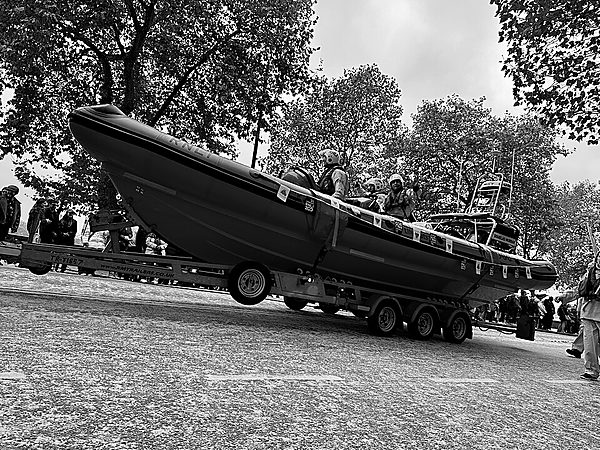
The Float to Live position: head back, ears submerged and limbs spread
The Royal National Lifeboat Institution says the initial effects of cold-water shock usually pass in less than a minute; physiologist Mike Tipton gives a practical range of roughly 60–90 seconds. The point isn’t to become comfortable. It’s to avoid spending that minute attempting a sprint while your breathing is mechanically out of control. Clothing may trap some air at first, but the technique still requires small hand movements for many people. RNLI cold-water guidance RNLI explanation with Mike Tipton
Once you can breathe, make one decision: out, or wait? If the overturned boat, ladder, bank or solid floating object is close enough to reach, get as much of your body out of the water as quickly as you safely can. Cold soon weakens fingers, arms and legs; tasks that seemed easy on deck—holding a line, fastening a jacket, climbing—can become impossible. If safety isn’t close, don’t swim merely to feel warmer. Transport Canada’s boating guidance says to swim only to reach safety or other people; otherwise conserve movement and heat. Transport Canada, Safe Boating Guide
With a properly worn life jacket holding your airway clear, waiting becomes a different skill. Draw your knees toward your chest and press your arms against your sides: the Heat Escape Lessening Position, or HELP. In a group, huddle chest-to-chest with arms around one another. Both positions reduce heat loss. A group huddle also keeps people together and creates a larger target for rescuers. A life jacket is not luggage for later: cold-disabled hands may be unable to put one on after immersion. U.S. Coast Guard, A Boater’s Guide to the Federal Requirements for Recreational Boats
Know the failure mode. Floating is a pause for regaining breath, not a promise that current, waves or cold will spare you. Don’t remain in the starfish position when a safe exit is immediately reachable, and don’t curl into HELP without flotation if doing so forces you to struggle to keep your face up. Never practise this by jumping into cold open water. Rehearse the position in a supervised pool, fully clothed if the facility permits; the RNLI specifically recommends supervised practice because bodies float differently. RNLI Float to Live
The body’s first message is urgent, sincere—and wrong. Give it one quiet minute to change its mind.
5 min read
A Question You Can’t Put Down
Can an instrument know better than its maker?
In September 1904, Robert W. Wood slipped a large aluminum prism out of an experimental apparatus in a blacked-out laboratory at the University of Nancy. The prism was supposed to divide an invisible radiation into a spectrum. Without it, there could be no spectrum. Yet René Blondlot calmly continued finding the same bright and dark bands in the same places. The instrument had lost a necessary part; the observations never faltered. Wood published the encounter in Nature eight days later.
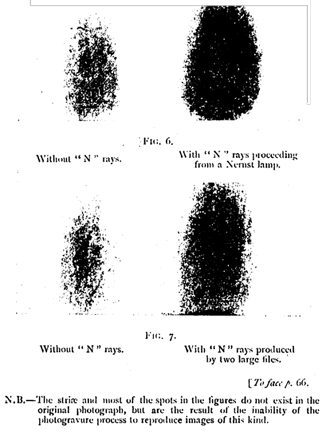
René Blondlot’s apparatus for detecting N-rays
What, exactly, had Wood proved?
Blondlot wasn’t a crank who’d wandered in from the rain. He was an accomplished physicist whose earlier experiments on electromagnetic waves were admired by Henri Poincaré and others. In 1903, while investigating X-rays, he reported a new radiation and named it for Nancy. N-rays supposedly passed through wood and aluminum, were stopped by water, and made a faint spark or phosphorescent screen slightly brighter. Hundreds of papers followed, mostly from France; Blondlot wrote twenty-six himself. Many physicists elsewhere saw nothing at all. The disagreement was already serious before Wood arrived.
Blondlot’s detector was not really the glowing strip. It was Blondlot. He moved a narrow phosphorescent line across the supposed spectrum and judged tiny changes in brightness with his dark-adapted eyes. He then calculated refractive indices and wavelengths from the positions where the glow appeared to change. His published results had tables, decimals and curves—the full plumage of measurement—but the first link in every chain was a man saying, brighter there. His own account describes aluminum prisms of 60 and 90 degrees and brightness changes used to distinguish two supposed kinds of ray.
Wood’s case is brutal. If removing the cause leaves the reported effect untouched, the effect isn’t evidence for that cause. Notice what makes this stronger than Wood merely saying, “I was unable to see any change whatever in the brilliancy of the phosphorescent line as I moved it along …” — the sentence goes on to report that removing the prism altogether “did not seem to interfere in any way with the location of the maxima and minima.” His eyesight is irrelevant. Blondlot’s answer is being tested against a fact Blondlot doesn’t know. The prism, magnificently incurious, keeps the secret. For once, expectation can’t quietly follow the experimental condition because expectation has been denied the condition.
This is the argument for blind tests in its purest form: ignorance can be an instrument. A person who knows what ought to happen may supply the missing result without deciding to cheat. Conceal what happened, and the world gets a chance to answer before hope does.
But grant Blondlot the strongest defense available—not that N-rays were real, but that Wood’s victory can be made too grand. Wood entered doubtful, altered another scientist’s delicate apparatus without permission, and interpreted the consequences himself. One ambush could show that this demonstration didn’t depend on its prism. It could not, by logic alone, show that every reported N-ray effect had the same defect. Even a failed mechanism doesn’t prove that no phenomenon waits behind it.
And instruments are not little truth-speaking gods. Every detector is a bundle of prior decisions: what counts as signal, what may be discarded as noise, which changes deserve recording. A machine can reveal what unaided senses miss, but only after people decide what the machine’s movements mean. Insisting upon an “objective” detector can therefore become another way of insisting that nature behave only in ways for which we’ve already built a socket.
Yet Blondlot’s alternative is worse. If the phenomenon appears only to a trained observer, and failed appearances can always be blamed on insufficient sensitivity, then the claim has made itself untouchable. Every failure becomes further proof that special eyes are required.
So where should authority sit: with the observer who can understand but anticipate, or with the mechanism that cannot anticipate because it understands nothing? Wood found a beautiful answer for one dark room. He did not find an answer that lets us leave the room.
5 min read
Out of Your Lane
Skull surgery before the surgeons
In 1865, Ephraim George Squier was given the frontal portion of a human skull in Cuzco. His hostess, Ana María Centeno de Romainville, collected Peruvian antiquities; this one had come from an Inca burial ground and had a square hole, a little larger than half an inch, cut into its forehead. Squier thought the cut deliberate—and, more startlingly, thought its owner had lived afterward. Doctors in New York accepted the opening was made by hand, though at least one doubted the bone proved it had been done while the man lived. Paul Broca examined the skull in Paris and agreed: this was surgery performed on a living person. In 1867 he presented it as an operation done by a method quite unlike the European crown saw. The hole had become evidence. (MIT Press; Broca’s original report)
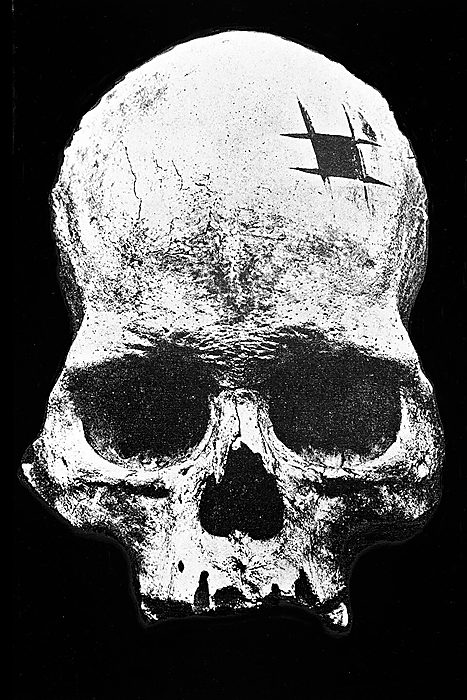
An ancient Peruvian skull with a healed trepanation
The lovely, grisly trick is that bone keeps minutes.
A fresh opening leaves sharp margins and exposes the skull’s sandwich-like middle layer, the diploë. If the patient lives, bone remodels. The rim becomes smooth and rounded; compact bone creeps over the exposed middle. A study that checked archaeological rules against scans of modern craniotomy patients confirmed that sequence. The dead cannot give a pain score, describe the operation, or say whether they returned to ordinary life. But the edge of the hole can answer one wonderfully narrow question: did healing begin? (Journal of Anatomy)
That turned museum shelves into a long clinical ledger. In 2018, David Kushner, John Verano, and Anne Titelbaum assembled observations from more than 800 trepanned Peruvian skulls spanning nearly two millennia. In their earliest group, dated 400–200 BC, about 40 percent showed long-term survival. Some samples from AD 1000–1400 reached 91 percent. In the Inca-period groups, dated to the 1400s and 1500s, the average was 75–83 percent. These aren’t legends about miraculous healers. They’re classifications of cut bone and healed bone. (World Neurosurgery)
The improvement appears in technique as well as totals. A focused study of eleven burial sites around Cuzco found 109 openings in 66 people. The common operations were scraping and circular cutting. Practitioners avoided dangerous parts of the cranium and used approaches less likely to injure the meninges and the large venous channels beneath the bone; about 83 percent of the openings showed long-term healing, with little evidence of later infection. Several people had been operated on more than once. Many holes sit beside older cranial injuries, so relief after a blow is a plausible purpose. “Plausible” matters: no case note survives to tell us why any particular skull was opened. (Andrushko and Verano’s Cuzco study)
Then comes the comparison that makes the story famous. Cranial surgery during the American Civil War carried an estimated mortality of 46–56 percent. In other words, the later Peruvian figures look better than those from surgeons working centuries afterward with metal instruments, anatomy texts, ether, and chloroform. (Kushner, Verano, and Titelbaum)
But this is not a clean contest, and anyone claiming that Incas beat modern doctors has let the headline operate without supervision. Civil War records mixed injuries of unknown severity, without imaging or useful stratification. Many patients had been struck by soft-lead Minié balls that shattered bone and dragged cloth, skin, and bacteria into the wound. The Peruvian figures come from healing in selected skulls; the wartime figures come from records of very different trauma. Even the 2018 comparison warns that Civil War short- and long-term survival are unknown. (Journal of Neurosurgery; Baylor’s medical review)
What the skulls do show is better. Across generations, a larger proportion of trepanned Andean skulls showed evidence of postoperative healing and survival. They left no surgical manual we can read, only the results of hundreds of decisions: where to cut, how wide, how deep, when to stop. Bone cannot explain the theory. It can preserve the correction.
4 min read
Facts to Steal
Seven things worth retelling
-
Kodak’s film detected fallout from the Trinity atomic test more than 1,000 miles away. X-ray film developed fogged spots after two weeks inside strawboard made in Vincennes, Indiana; a Kodak researcher found beta-emitting contamination in the cardboard and concluded that the likeliest culprit was wind-borne fission debris from New Mexico, carried into the mill by river water—a bomb test tattled on by its packaging.
-
To discover how desert ants measure the journey home, scientists lengthened some ants’ legs into “stilts” and shortened others into “stumps.” The long-legged ants overshot the nest and the short-legged ones stopped early: compelling evidence that the insects’ odometer integrates their strides rather than measuring elapsed time or effort (the original Science study).
-
The white lumps in Roman concrete, long dismissed as badly mixed lime, may be built-in repair cartridges. Water entering a crack dissolves calcium from a lump and redeposits it as solid calcium carbonate; when an MIT-led team cracked Roman-style replicas, the quicklime mixture sealed itself within two weeks while the control kept leaking (MIT’s account of the experiment).
-
In 1860 Édouard-Léon Scott de Martinville recorded a singer on soot-blackened paper with a machine that could draw sound but couldn’t play it. The squiggle remained mute until 2008, when digital imaging turned it back into Au clair de la lune: a voice mailed 148 years into the future by someone who couldn’t hear the message.
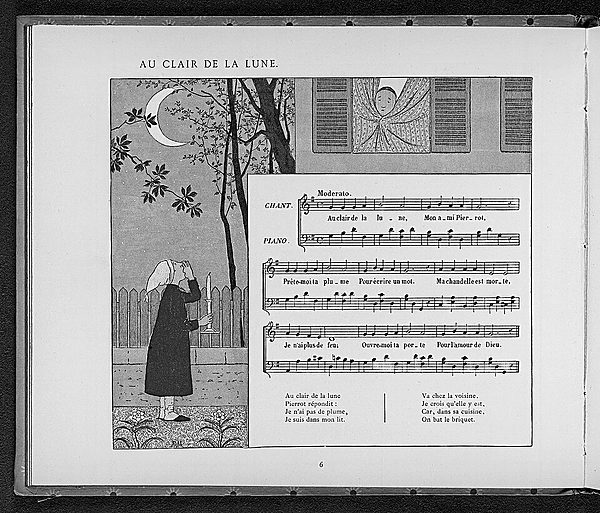
Scott de Martinville’s 1860 phonautogram of Au clair de la lune
- A scallop can carry as many as 200 eyes along its mantle, and each focuses light with a concave mirror instead of a lens. The mirror is tiled from microscopic square crystals of guanine—the same molecule used as one of DNA’s four letters—and throws separate images onto two retinal layers (the eye’s published anatomy).
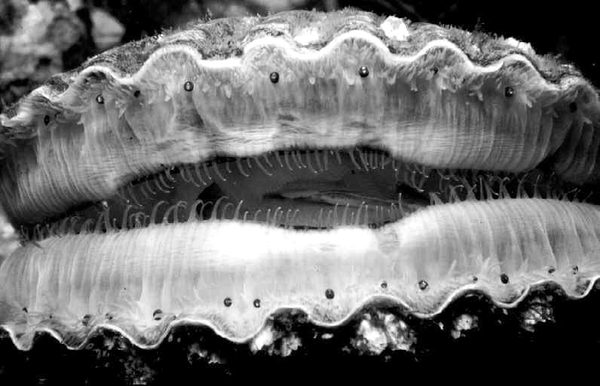
The blue eyes lining the edge of a scallop’s mantle
-
Some dunes produce a sustained bass note during an avalanche, with a fundamental around 70–105 hertz and harmonics above it. Everyone agrees that moving sand sings; researchers still dispute the instrument, with one experiment finding synchronized grain motion and Caltech measurements pointing to a loose, dry layer acting as a buried waveguide.
-
A fired pot keeps time by quietly collecting displaced electrons from natural radiation. Heating a sample in the laboratory releases the trapped energy as faint light, whose strength can reveal when the clay was last fired—not when it was buried, painted, or declared “ancient” by a hopeful dealer (Smithsonian Museum Conservation Institute; University of Pennsylvania account of the mechanism).
5 min read
Barrett’s Crystal
A ceremony for authenticating angels
The first thing Francis Barrett tells you is that the angel you summoned may not be the angel who arrives.
Barrett published his crystal operation in London in 1801, at the end of The Magus. He also advertised private instruction at 99 Norton Street between eleven and two, limiting his proposed school to twelve students. One pupil escaped the advertisement: John Parkins. A surviving manuscript dated 1802 names Parkins as Barrett’s pupil and announces that he teaches “Divine Magic” at Little Gonerby in Lincolnshire. Its instructions call for a crystal, clean linen, copious incense, and the consecrations in The Magus. This was not merely something Barrett had copied into a handsome book; somebody carried it into the provinces and set up shop. The manuscript survives at the Wellcome Collection.
Begin with a flawless crystal sphere about an inch and a half across. A gold band clasps its lower half and fixes it to an ivory or ebony pedestal. Engrave divine characters and Tetragrammaton on the inner face of the band; Michael, Gabriel, Uriel, and Raphael go on the reverse. Draw a double circle and triangle upon the working table, writing the seven planets, their angels and seals, and the four kings of the cardinal directions inside the double circle. Stand the crystal in the triangle. Add two wax tapers, an incense burner, a black ebony wand lettered in gold, a ring, a pentacle, pen, ink, and a new white notebook roughly seven inches long. Barrett is wonderfully exact until the shopping becomes expensive. His instructions and plates specify the apparatus.
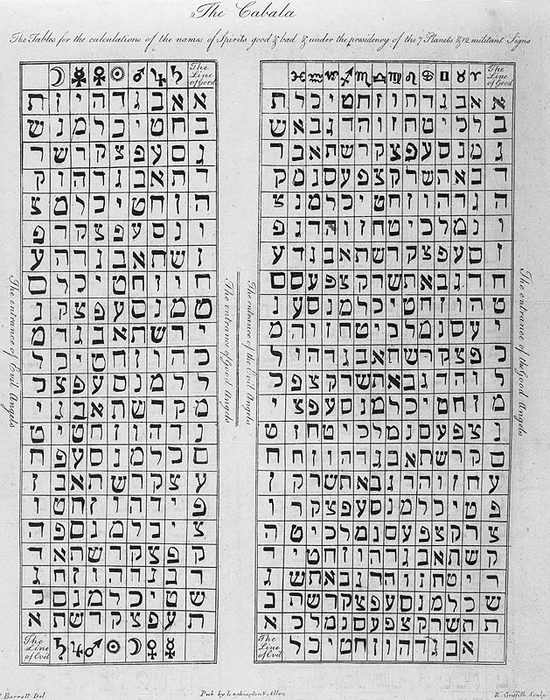
Francis Barrett’s crystal, pedestal, circle, candles and table of practice
Bring a second person. Barrett insists upon this because an apparition may be visible to one operator and absent to the other—a peculiar sort of witness who cannot confirm the evidence.
Choose the angel by planetary hour. These aren’t sixty-minute hours: divide daylight, sunrise to sunset, into twelve equal portions, and do the same separately with the night. Thus summer’s daytime hours are long and winter’s are short. For the simplest run, begin at sunrise on Sunday, when Barrett’s table assigns the first hour to Michael. The complete calculation and angelic timetable appear at the operation’s end.
Put the ring on the right little finger and hang the pentacle—parchment or silver—over the breast. Touch the crystal and pray that it be made a truthful instrument, admitting no false apparition or ambiguity. With the ebony wand, trace a circle around the two operators and declare it defensive ground. Set a heatproof incense vessel between circle and table; Barrett’s text calls for fire and perfume, blessed against deception, but do not burn charcoal indoors. CPSC carbon-monoxide guidance Open the notebook and keep the pen ready.
Now call Michael by name, asking him to take a visible form inside the crystal and answer only lawful questions. Look into the sphere. If either operator sees something, thank God for permitting the appearance—but don’t trust it yet.
Ask, in order: What is your true name? What is your office? What is your sign or character? At what times may you be called? Then require the apparition to swear that it really is Michael. Copy its sign, office, preferred hours, and every answer into the book. When finished, formally grant it permission to depart in peace. Barrett does not permit the magical equivalent of simply hanging up. The interrogation and dismissal are prescribed together.
The crystal’s weakness is also its talent. In a modern experiment, people staring at their own faces under very dim illumination began reporting altered, unknown, animal, and monstrous faces after about a minute; sometimes they felt that another person was watching from beyond the glass. A later systematic review confirms that low light, fixation, and faces can provoke such apparitions, but says the underlying mechanism remains unsettled. A mirror is not Barrett’s crystal, so this doesn’t explain his operation neatly. It suggests a modern perceptual parallel that may help explain why authentication could seem useful, but it does not establish Barrett’s reason for including the ceremony: the instrument produces a witness, then leaves the operator to decide whether the witness exists. PubMed; 2023 systematic review
5 min read
The Uncanny Hour
When the camera told the truth
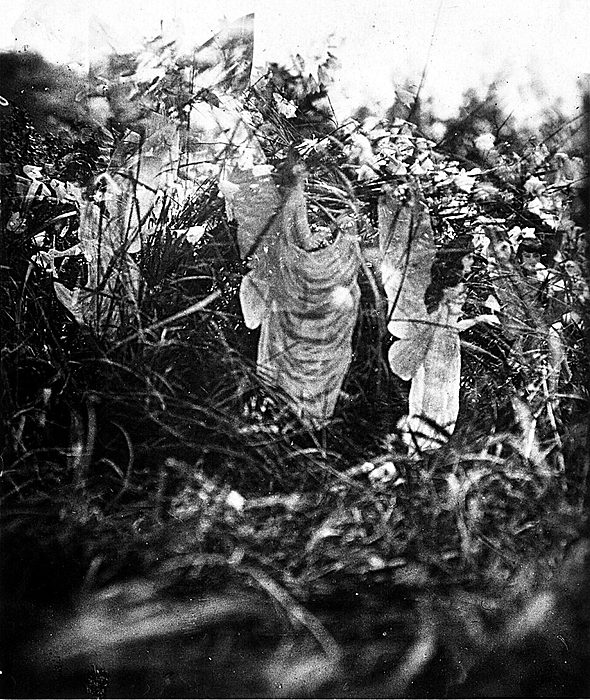
When Arthur Wright developed the plate, the fairies were there.
His daughter Elsie and her cousin Frances had borrowed his quarter-plate Midg camera and disappeared for less than an hour behind the house in Cottingley, Yorkshire. It was a brilliantly sunny afternoon in July 1917. The exposure lasted one-fiftieth of a second. Frances stood beside the beck, looking calmly into the lens while four tiny women danced in front of her; one played a pipe. Wright knew which plate he had loaded and which plate had come back. He also knew, with some irritation, that there were no fairies at the bottom of his garden. Arthur Conan Doyle’s later account preserves Wright’s evidence and the camera settings.

Frances Griffiths with the dancing Cottingley fairies in 1917
The camera had recorded everything correctly. That was the trouble.
Elsie had drawn the figures on stiff paper, borrowing their poses from Claude Shepperson’s illustrations in Princess Mary’s Gift Book. The cousins cut them out with scissors, fixed them among the foliage with hatpins, and photographed the little stage set in ordinary daylight. The original negative was a single exposure of the staged cutouts, though Snelling later retouched the version prepared for publication. The fairies really had been standing in front of the lens, in precisely the mechanical sense that mattered to the lens. The National Science and Media Museum now holds cameras and records from the affair.
For about two years the pictures remained a largely private curiosity. Then Elsie’s mother took them to a Bradford lecture on fairy life. They reached Edward Gardner of the Theosophical Society, who sent the negatives to Harold Snelling, a photographic specialist with decades of experience. Snelling found a single outdoor exposure and no sign of studio combination. He even thought the fairy figures had moved during the exposure. To him, those findings disposed of the obvious frauds: painted backdrops, retouched plates, double exposures. Doyle reproduced Snelling’s report and Gardner’s correspondence in The Coming of the Fairies.
Kodak’s experts were cannier. They likewise found no superposition or photographic trick, but refused to certify anything supernatural; knowledgeable people, they said, could produce such a picture by natural means. This was exactly right, though the Wrights did search the bedroom and the beck and found nothing — the girls had destroyed the cutouts — and nobody afterwards grasped that a cutout held in front of the lens leaves no trace of combination at all. Gardner instead visited Cottingley, found the scenery matched, liked the family, and came home persuaded. Human character became evidence for a claim about paper fairies. The surviving correspondence and negatives are catalogued by the University of Leeds.
Gardner then supplied Elsie and Frances with new cameras and secretly marked plates. The marked plates guarded against plate substitution and helped establish provenance, but did not prevent double exposure or other staging performed while the equipment was in the girls’ custody. They did nothing about objects placed in front of the camera. Three more photographs duly arrived in 1920. One fairy offered Elsie flowers from a branch; another leapt near Frances; a third picture showed a vague “Fairies’ Bower” in the grass. Doyle published two of the new photographs in The Strand and, in 1922, built a book around all five. Leeds University Library’s account traces the marked plates, expert examinations and publication.
The quarter-plate camera used for the later Cottingley fairy photographs
Frances’s account entered the record in December 1982. Elsie wrote to photographic journalist Geoffrey Crawley on 17 February 1983 and admitted the cutouts and hatpins; both women acknowledged that the first four pictures were fakes. Elsie said all five were false. Frances would not surrender the last one—the empty-looking bower—and maintained until her death that it showed real fairies. The museum preserves Elsie’s dated confession letter and the women’s disagreement.
Nothing in that fifth photograph requires fairies. What remains unexplained is why Frances kept one small door open after closing the other four.
The experts had examined the plates competently. The camera had testified impeccably. They had merely asked it whether the photograph was genuine when they meant to ask whether the fairies were.
4 min read
The Parlour Trick
The banana cut from the inside
The effect. Hold up an ordinary, unpeeled banana. Pass one finger across it three or four times, as though making cuts in the air. Give it immediately to someone else.
When they peel it, the fruit falls out in neat slices. The skin was whole. They held the knife—which was invisible, and had already left.
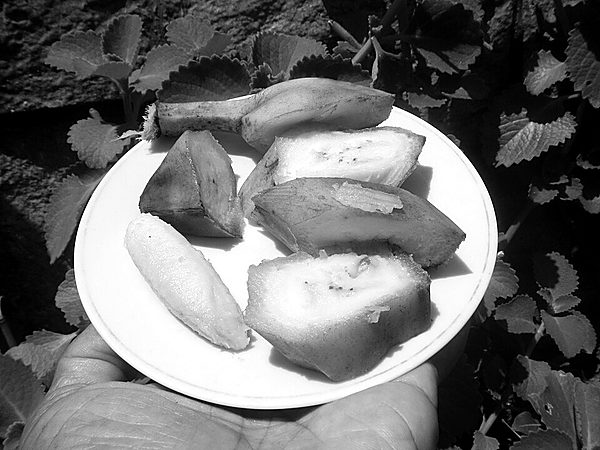
An unpeeled banana opened to reveal the fruit already cut into slices
The secret. Thread can travel around the banana inside its peel. Pull the completed loop and it closes like a wire saw, severing the soft fruit while leaving only a few needle-pricks in the skin. The method appeared in Science and Invention in August 1923; a modern description gives the same hidden-loop construction in particularly clear detail. (1923 source, illustrated method)
With clean hands and equipment, wash the banana under running water and dry it. You need a spotted ripe banana, a fine sewing needle and about 30 centimetres of thread. Refrigerate it after preparation if it will not be served within two hours. (FDA produce safety, FoodSafety.gov fruit and vegetable safety) Difficulty: easy after one sacrificial banana. The only fiddly part is remembering where the thread is beneath the peel.
The handling.
-
Thread the needle. Choose a brown freckle on one of the banana’s lengthwise ridges; this will conceal your first puncture.
-
At the place where you want a slice, push the needle through the peel and run it just beneath the skin to the next ridge. Bring it out, leaving several centimetres of thread behind.
-
Put the needle back through that same exit hole. Travel beneath the peel to the next ridge and emerge again. Leave a loose loop outside at each turn; don’t pull anything tight yet.
-
Continue around the banana until the needle comes out through the original puncture. Both ends of the thread should now emerge from one hole, while the rest forms a complete loop inside the peel.
-
Pull both ends gently, in the directions they naturally leave the hole. The loop contracts through the fruit, cuts it, and comes out. Wipe away any moisture. Repeat at three or four places. A ripe, freckled skin hides the punctures best.
-
In company, don’t explain or count anything. Say, “Bananas are packed in sections at the factory, but they usually forget the final step.” Draw your finger across the prepared places, hand over the fruit, and let someone else peel it. Their hands should discover the impossibility.
The lovely part is that the peel isn’t repaired, switched or optically disguised. It has simply reported the wrong fact: whole outside does not mean whole inside.
The out. If one cut hasn’t gone completely through, the banana will hinge instead of falling apart. Call that slice “medium rare” and pull it apart; the others will still land. Don’t repeat immediately. Hand over the opened peel for inspection, eat the evidence, and say the machine only accepts one banana per shift.
3 min read
The Back Page
Riddle, weather sign, last words
The instrument that refuses to move
My house runs when the floor runs.
My heart stays behind.
By refusing to follow,
I write down what the earth has done.
What am I?
Listen to the snow
When snow squeaks beneath your boots, it really is telling you something: the snowpack is cold.
A footstep forces thousands of ice grains together. Near the melting point, their surfaces slide with relatively little noise. As the temperature falls, friction between the grains increases; they grind, fracture and produce that peculiar rubbery squeak. The colder the snow, the louder it generally becomes.
So this sign has a sound physical basis, but no useful scale. The National Snow and Ice Data Center says there’s no dependable temperature at which crunching begins: crystal shape, age and thawing all interfere. It’s a thermometer without numbers, and it forecasts nothing beyond cold feet.
Eleven miles
On March 29, 1912, Robert Falcon Scott lay stormbound with Edward Wilson and Henry Bowers, eleven miles from a food-and-fuel depot. They had been ready to leave for days, but outside the tent the drift kept whirling.
Scott wrote that the end couldn’t be far and that he didn’t think he could write any more. He signed his name. Then, beneath the signature, came one last instruction. The diary was found under his shoulders eight months later.
For God’s sake look after our people.
— Robert Falcon Scott, Scott’s Last Expedition (1913), Project Gutenberg
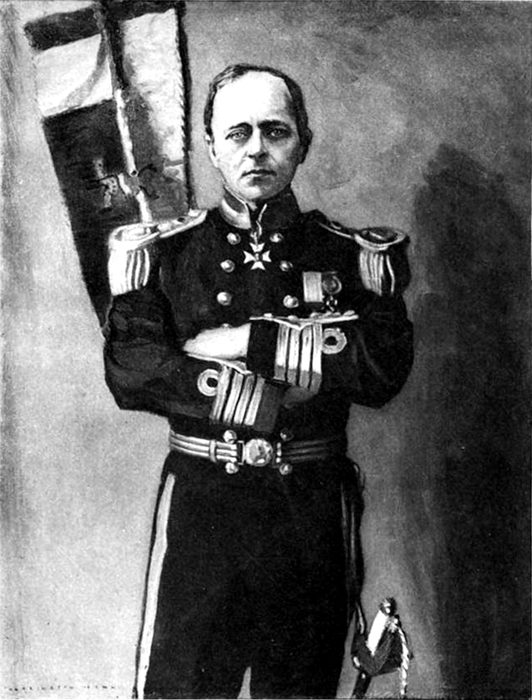
Captain Robert Falcon Scott
Answer: a seismograph.